
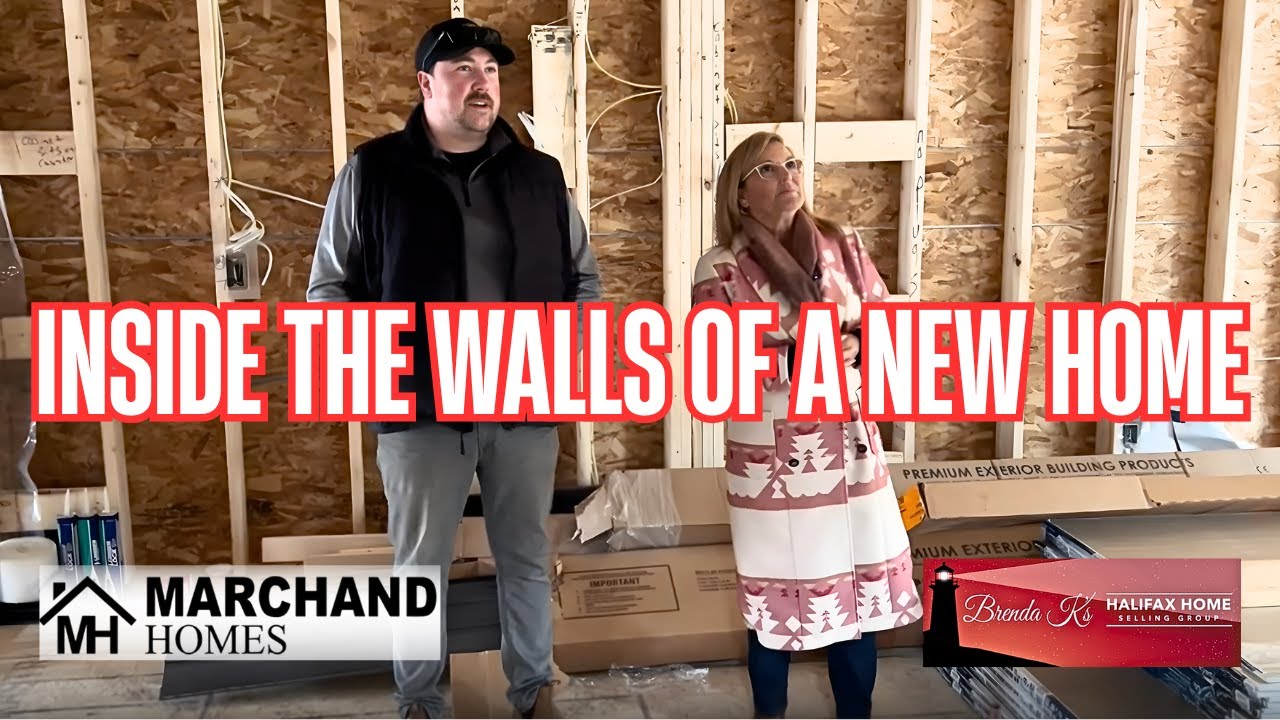
Once the foundation is complete and the home is framed, the build enters a stage where progress feels fast — but much of the most important work is happening out of sight.
In Part 3 of our A New Home Build from Start to Finish series, I’m back on site in Dartmouth, Nova Scotia, with Chris from Marchand Homes to walk through what happens after framing and before drywall — the stage where a house truly becomes functional.
From Framing to Rough-Ins
After a home is framed and made watertight, the next phase begins: rough-ins. This is when the systems that allow a home to function are installed inside the structure.
The order matters. Plumbing is typically installed first to ensure proper grading and drainage. HVAC follows, including heat pumps and heat recovery ventilation systems. Electrical work comes last, as wiring can more easily be run around the larger mechanical systems already in place.
Although these trades work independently, this phase is carefully coordinated so everything fits together correctly inside the walls.
Why Inspections Happen When They Do
Framing inspections are often completed at the same time as rough-in inspections. By waiting until plumbing, HVAC, and electrical work is installed, inspectors can ensure that any cuts made to joists or framing members still meet structural code requirements.
This timing is intentional. Once drywall is installed, much of this work is hidden permanently, which is why inspections are concentrated heavily before walls are closed up.
Engineered Floor Systems and Structural Support
Modern home construction relies heavily on engineered systems. Engineered floor joists and trusses allow for wider spans and more open-concept layouts than traditional framing methods.
Steel beams are also commonly used to support large open areas without the need for additional walls. Together, these systems provide strength, flexibility in design, and long-term structural stability.
Why Bathtubs and Showers Go in Early
One detail that often surprises buyers is seeing bathtubs installed before drywall. This happens for two main reasons.
First, tubs are often located on exterior walls, which need to be insulated early in the process. Second, these fixtures must be installed and inspected before walls are closed, as plumbing connections would otherwise be inaccessible.
In some cases, spray foam insulation is used in shower areas to maintain airtightness where traditional insulation and vapour barriers can’t be applied.
The Last Chance to See What’s Inside the Walls
This stage of the build is the final opportunity to see how everything works together behind the scenes. Once inspections are complete and drywall is installed, the home moves into the finishing stages — and progress shifts from structure to style.
Understanding this phase can help buyers feel more confident about the quality of construction and the care taken during the build process.
In the next episode, we move closer to the finish line as interior finishes, kitchens, flooring, and final fit-ups begin to transform the house into a home.
Watch the Build Series
This blog post is part of our A New Home Build from Start to Finish series on the Halifax Real Estate YouTube channel.
1️⃣ Watch Episode 1: Before the Home Build Begins
2️⃣ Watch Episode 2: Building a Home from the Ground Up
3️⃣ Watch Episode 3: How a House Comes Together Behind the Walls
If you’re starting to think about building a home, buying new construction, or planning your next move, my team of buyer specialists and I would be happy to help you explore what makes the most sense for you. You can reach us anytime at 902-471-8497 or learn more at www.brendak.ca