
Buying a home is one of the biggest financial decisions most people will ever make, and while it’s easy to fall in love with a beautiful kitchen or a backyard that feels just right, it’s equally important to understand the condition of the home you’re buying.
That’s where a home inspection comes in.
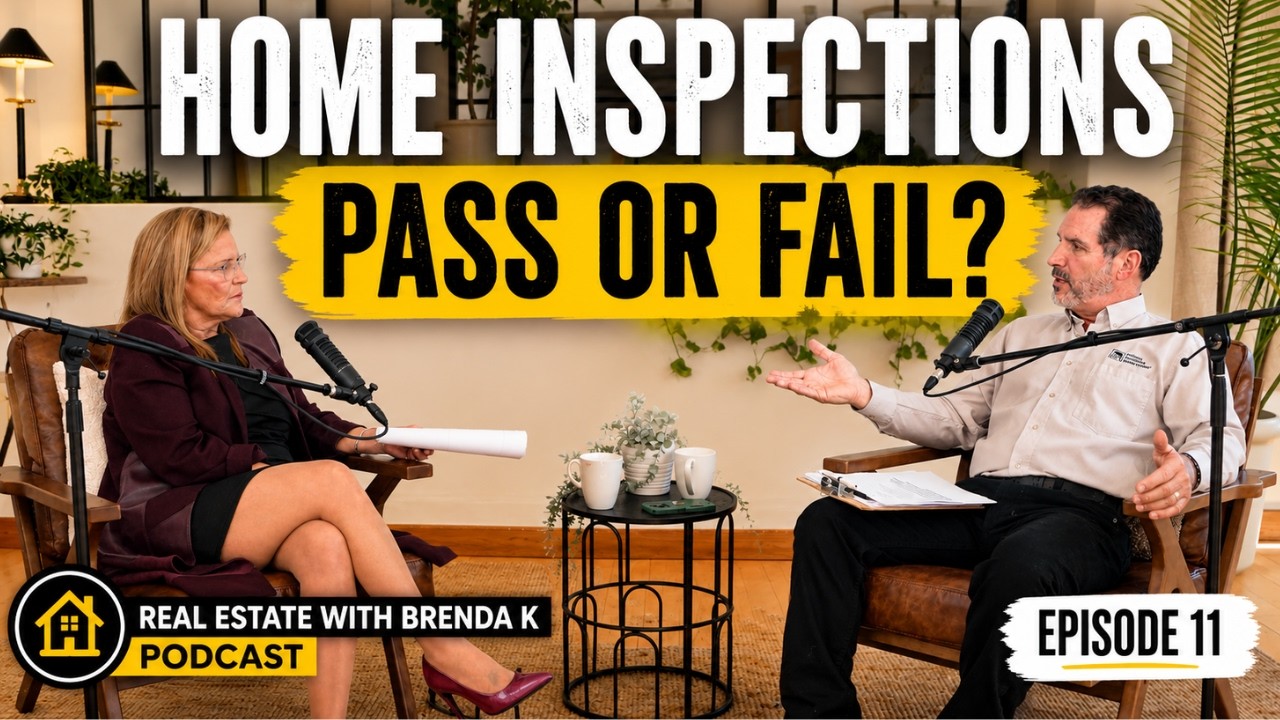
On this episode of Real Estate with Brenda K, I sat down with experienced home inspector Mike to discuss what a home inspection is, what buyers should expect, what inspectors can and cannot tell you, and why choosing the right professional is such an important part of the home-buying process.
Whether you’re purchasing your first home or your fifth, understanding the purpose of a home inspection can help you make a more confident and informed decision.
Home Inspections Haven’t Always Been Part of the Buying Process
Many buyers assume home inspections have always been a standard part of purchasing a home, but that’s actually a relatively recent development.
When I first became involved in real estate, inspections were far less common. Buyers often purchased homes under the principle of “buyer beware,” relying largely on their own observations and experience.
Over the past few decades, however, home inspections have become an essential part of most real estate transactions. Today, they’re one of the best tools buyers have to better understand the condition of a property before finalizing their purchase.
Rather than looking for a “perfect” home, a home inspection helps buyers understand the home’s systems, identify areas that may require maintenance or repair, and make informed decisions before moving forward.
What Does a Home Inspector Actually Do?
One of the biggest misconceptions buyers have is believing that a home inspection is a pass-or-fail test.
It isn’t.
A home inspection is a visual assessment of a property’s major components that are reasonably accessible at the time of the inspection. The inspector evaluates items such as the roof, foundation, exterior, structure, plumbing, electrical systems, heating and cooling equipment, insulation, windows, doors, and other visible components of the home.
The goal isn’t to decide whether you should buy the property.
The goal is to provide information so you can decide whether you’re comfortable moving forward with the purchase.
Every home—whether it’s five years old or fifty—will have maintenance items. Understanding the difference between normal wear, routine maintenance, and more significant concerns is one of the most valuable parts of the inspection process.
Choosing the Right Home Inspector Matters
One point that stood out during our conversation was the importance of selecting an experienced home inspector.
Like many professions, experience matters.
A knowledgeable inspector brings years of practical experience, ongoing education, and an understanding of how homes are constructed and how their systems work together.
While buyers often spend considerable time researching neighbourhoods and mortgage options, it’s equally worthwhile to research the inspector you’ll be relying on for one of the most important evaluations during the purchase process.
Ask about their background, experience, professional memberships, insurance coverage, and whether they continue to participate in ongoing education.
A thorough inspection and a well-written report can provide valuable peace of mind.
What a Home Inspection Can—and Can’t—Tell You
One of the most important parts of our conversation focused on understanding the limitations of a home inspection.
A home inspection is primarily a visual inspection.
Inspectors cannot see behind finished walls, beneath flooring, or inside concealed spaces. If there are no visible signs of a hidden issue, there may be no way to identify it during the inspection.
That doesn’t mean the inspection isn’t valuable.
Far from it.
Experienced inspectors use specialized tools, observations, and their knowledge of construction practices to identify visible concerns and recommend further evaluation whenever appropriate.
In some cases, an inspector may recommend additional review by a licensed electrician, plumber, HVAC technician, structural engineer, or another qualified professional if a particular system requires further investigation.
Knowing when additional expertise is needed is an important part of the inspection process.
Modern Technology Has Improved Home Inspections
Like many industries, home inspections have evolved over the years.
Today’s inspectors often use technology such as moisture meters and thermal imaging cameras to help identify temperature differences or moisture patterns that may not be visible to the naked eye.
These tools don’t allow inspectors to “see through walls,” but they can provide additional information that may warrant closer investigation.
Technology has become another valuable resource in helping inspectors evaluate a home’s overall condition.
Maintenance Isn’t the Same as a Defect
Another topic we discussed is one that often surprises buyers.
Not every item identified during a home inspection represents a defect.
Homes require ongoing maintenance throughout their lives.
Roof shingles eventually wear out. Windows age. Decks weather. Caulking dries out. Heating systems require servicing. These are all part of owning a home.
An inspection helps distinguish between routine maintenance, items that may need attention in the future, and issues that should be addressed more immediately.
Understanding that difference helps buyers approach the inspection report with realistic expectations.
Older Homes Aren’t Expected to Meet Today’s Building Standards
One common misconception is that every older home should meet today’s building code requirements.
In reality, homes are generally built to the standards that existed at the time they were constructed.
As building codes evolve, new safety requirements and construction practices are introduced, but that doesn’t automatically mean every older home must be upgraded to current standards before it can be sold.
During an inspection, buyers may learn about features that were common when the home was built, along with recommendations for improvements that could enhance safety or performance over time.
Those recommendations help buyers better understand the home, but they don’t necessarily indicate that something is defective.
Attend the Home Inspection If You Can
If you’re buying a home, one of the best pieces of advice I can offer is to attend the inspection whenever possible.
Walking through the home with the inspector gives you an opportunity to ask questions, better understand how different systems operate, and learn about routine maintenance that will help protect your investment after you move in.
Many inspectors also take time to explain practical home maintenance, such as changing furnace filters, locating water shut-off valves, operating ventilation systems, and maintaining various components throughout the home.
For first-time buyers especially, this can be an invaluable learning experience.
Your Home Inspector and Realtor Each Have an Important Role
One point Mike emphasized during our conversation is that every professional involved in a real estate transaction has a specific role.
A home inspector’s job is to evaluate the visible condition of the property and provide an objective report based on their findings.
Your REALTOR®’s role is different.
Once the inspection is complete, your REALTOR® can help you understand how the findings may affect the transaction, discuss possible next steps, and guide you through any negotiations that may arise.
When everyone stays within their area of expertise, buyers receive the best advice from the right professionals at the right time.
The Biggest Takeaway
If there was one message that stood out throughout our conversation, it was this:
A home inspection isn’t about finding reasons not to buy a home.
It’s about helping you understand the home you’re buying.
Every property has a story. A home inspection helps uncover that story by identifying maintenance items, explaining how major systems function, and highlighting areas that may require attention now or in the future.
The more you understand about a home before you purchase it, the more confident you’ll feel about your decision.
Watch the Full Episode
If you’re buying a home—or simply want a better understanding of what happens during a home inspection—I encourage you to watch my full conversation with Mike on Real Estate with Brenda K.
We discuss how home inspections have evolved, what buyers should expect, common misconceptions, the role of technology, and why understanding both the strengths and limitations of an inspection is so important.
You can also listen to Real Estate with Brenda K on Spotify, Apple Podcasts, and wherever you enjoy your favourite podcasts.
Thinking About Buying or Selling?
Whether you’re purchasing your first home, moving up to your next property, or preparing to sell, having the right professionals by your side makes all the difference.
If you have questions about buying or selling real estate in Halifax, Dartmouth, or the surrounding communities, I’d be happy to help.
And remember, when you’re thinking real estate in Halifax, think Brenda K